Asia covers more ground — geographically and culturally — than any other continent on a typical bucket list. A trip built around Tokyo’s precision and Bali’s beaches has almost nothing in common with one built around Nepal’s mountains or Sri Lanka’s coastline, even though all four sit under the same «Asia» heading. That’s why «best places to visit in Asia» is really several different questions depending on what you’re after.
This guide breaks the continent down by sub-region and travel style, with a practical starting point for each: where to go, how long to stay, when to go, and what’s genuinely worth the trip. It also covers the entry rules and fees that have shifted the most heading into 2026 and 2027 — several of Asia’s most popular destinations have changed their visa, arrival, and tourist-fee systems significantly in the past year.
How to Use This Guide
Before picking a destination, it helps to know what you’re optimizing for:
- Pace — one country deeply, or several countries in one trip?
- Season — Asia’s monsoon patterns vary enormously by region, so «best time to visit» changes completely depending on where you’re headed.
- Interest — modern cities and food culture, ancient temples and history, beaches and islands, or mountains and trekking?
Each destination below is tagged with what it’s genuinely best for, rather than ranked as if one list could fit every kind of trip.
Quick-Reference: Asia’s Top Destinations at a Glance
| Destination | Best For | Ideal Trip Length | Best Time to Visit |
|---|---|---|---|
| Tokyo & Kyoto, Japan | First-time visitors, food, culture | 7–10 days | March–April (cherry blossoms), Oct–Nov (autumn colors) |
| Bali, Indonesia | Beaches, wellness, value | 7–10 days | April–October (dry season) |
| Bangkok & Chiang Mai, Thailand | Culture, food, easy first trip to SE Asia | 7–10 days | November–February |
| Ho Chi Minh City & Hanoi, Vietnam | Value, history, food | 10–14 days | Feb–April (south), Oct–Dec (north) |
| Singapore | Short stopover, food, ease of travel | 2–4 days | Year-round (equatorial) |
| Siem Reap, Cambodia | Ancient temples (Angkor Wat) | 3–4 days | November–February |
| Seoul & Busan, South Korea | Modern culture, food, K-culture | 6–8 days | March–May, Sept–Nov |
| Sri Lanka | Beaches + wildlife + culture in one trip | 10–14 days | Dec–March (west/south coast) |
| Nepal (Kathmandu/Pokhara) | Trekking, mountains | 10–14 days | Oct–Nov, March–April |
| Philippines (Palawan/Cebu) | Islands, diving, beaches | 7–10 days | November–May (dry season) |
| Maldives | Overwater luxury, honeymoon | 5–7 days | November–April |
| Beijing & Shanghai, China | History, scale, modern megacities | 10–12 days | April–May, Sept–Oct |
| India (Golden Triangle) | History, culture, depth over breadth | 10–14 days | October–March |
| Malaysia (Kuala Lumpur/Penang) | Value, food, easy multi-culture mix | 7–10 days | Year-round, avoiding monsoon pockets |
East Asia: Precision, History, and Modern Cities
Japan remains the most requested first-time destination in Asia, and Tokyo and Kyoto together form the natural core of a trip — Tokyo for scale, food, and modern culture; Kyoto for temples, gardens, and a slower pace. A week to ten days lets you add Osaka or a day trip to Nara without rushing. Japan has also introduced significant new tourist-management measures for 2026: Mount Fuji’s Yoshida Trail now charges a ¥4,000 climbing fee with a daily cap of 4,000 hikers, Kyoto’s accommodation tax has moved to a tiered structure reaching up to ¥10,000 per night at luxury properties, and Japan’s international departure tax triples from ¥1,000 to ¥3,000 from July 2026. None of this makes Japan less worth visiting — if anything, sites like the Fuji trails are reportedly less chaotic than in 2023–2024 — but it does mean budgeting a bit more than in past years, and it’s part of why many guides now also point first-timers toward Kanazawa, Takayama, or Hiroshima as excellent alternatives to the most saturated stops.
South Korea pairs Seoul’s density and nightlife with Busan’s coastal, more relaxed character. Six to eight days covers both comfortably, and Korea has been one of Asia’s fastest-growing inbound markets in 2026, so infrastructure and English-language signage for visitors continue to improve.
China rewards a longer trip given the distances involved — Beijing for imperial history (the Forbidden City, the Great Wall), Shanghai for its skyline and modern pace, with Xi’an’s Terracotta Army as a common add-on. China’s visa policy has become considerably more accessible: as of 2026, ordinary passport holders from around 50 countries — including all EU member states, the UK, and Canada — can enter visa-free for stays of up to 30 days, a major shift from just a few years ago. It’s worth double-checking your specific nationality against the current list before booking, since the policy has been extended and expanded multiple times.
Southeast Asia: Value, Beaches, and Temples
Thailand remains one of the easiest entry points into Southeast Asia. Bangkok and Chiang Mai make a strong week-to-ten-day combination — Bangkok for temples, street food, and energy; Chiang Mai for a slower pace and easy access to northern hill country. Two things have changed for 2026 travel: the Thailand Digital Arrival Card (TDAC) is now mandatory for every foreign national on every entry, submitted online within 72 hours of arrival, and the long-standing 60-day visa exemption for most Western nationalities is under active review by the Thai cabinet, with a reversion to 30 days possible at any point. It’s worth checking the current stay allowance shortly before booking rather than assuming the 60-day rule still applies.
Bali continues to anchor most Indonesia itineraries, and a week to ten days is enough to combine the cultural hub of Ubud, the beach towns of the south coast, and at least one day trip to rice terraces or a volcano viewpoint. Every foreign visitor now pays a one-time Bali tourist levy of IDR 150,000 (about $10 USD), paid online in advance via the official «Love Bali» portal or at the airport — it’s separate from any visa fee and from Indonesia’s mandatory digital arrival card, so budget for both as distinct line items.
Vietnam offers some of the best value-for-money travel in the region, and a north-to-south (or south-to-north) route between Hanoi and Ho Chi Minh City, with Hoi An and Ha Long Bay along the way, is the classic itinerary — plan on 10 to 14 days to do it without feeling rushed.
Cambodia’s Angkor Wat and the surrounding temple complexes around Siem Reap are worth a dedicated three to four days on their own, and pair naturally with either a Thailand or Vietnam trip as an add-on.
Singapore works best as a short stopover — two to four days covers the hawker centers, Gardens by the Bay, and a couple of neighborhoods well — or as an easy, low-friction gateway into a longer Southeast Asia trip given its major air hub status.
The Philippines, particularly Palawan and Cebu, is Southeast Asia’s strongest pick for diving and remote-island beaches, though inter-island travel takes real planning; a week to ten days works best if you pick one or two island bases rather than trying to island-hop extensively.
Malaysia, especially Kuala Lumpur combined with Penang’s food scene, is one of the region’s best-value multi-culture trips, blending Malay, Chinese, and Indian influences in a way few other countries can match in one itinerary.
South Asia: Depth, Culture, and Mountains
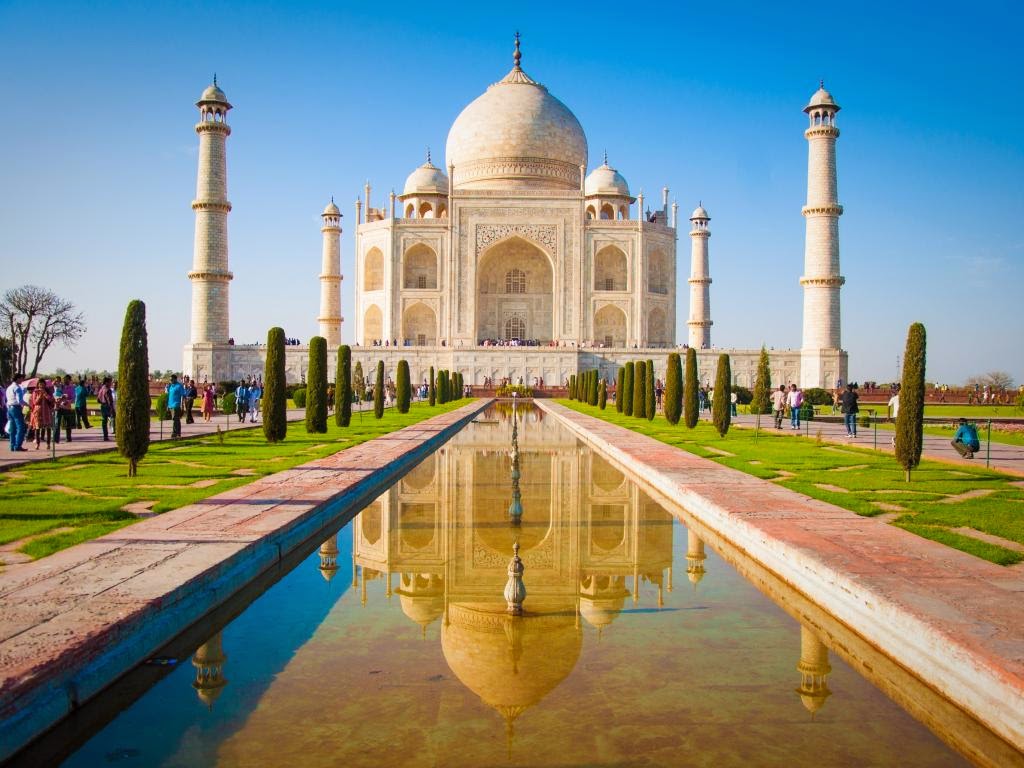
India’s Golden Triangle — Delhi, Agra (the Taj Mahal), and Jaipur — remains the standard first-time route, and 10 to 14 days lets you extend into Rajasthan or Varanasi without over-packing the schedule. October through March avoids the most extreme heat across the north.
Sri Lanka packs an unusual amount of variety into a relatively small country — beaches on the south and west coasts, wildlife safaris (leopards and elephants) in the national parks, hill-country tea plantations, and ancient cities like Sigiriya and Anuradhapura all within a manageable 10-to-14-day loop.
Nepal is the region’s trekking anchor. Kathmandu and Pokhara serve as bases for everything from short Annapurna foothill hikes to multi-week treks toward Everest Base Camp; October–November and March–April offer the clearest mountain visibility and most stable weather.
The Maldives sits apart from the rest of South Asia in both cost and format — this is a resort- and overwater-villa-based trip rather than an exploratory one, best suited to five to seven days and honeymoon or milestone travel rather than backpacking-style itineraries.
Sample Two-Week Itinerary: Japan + South Korea
For travelers combining two of East Asia’s strongest destinations in one trip:
- Days 1–4: Tokyo — Shibuya, Asakusa, day trip to Nikko or Hakone
- Days 5–7: Kyoto — temples, Arashiyama, Nara day trip
- Days 8–9: Travel + Osaka — food-focused stopover
- Days 10–11: Travel + Seoul
- Days 12–14: Seoul — palaces, markets, Han River, day trip to the DMZ or Busan (time permitting)
This keeps transit manageable while covering two very different — but complementary — travel styles within the same region.
Travel Rules and Costs to Know Before You Go (2026–2027)
Entry requirements and tourist fees across Asia have shifted substantially over the past two years, and several changes affect trip planning directly:
Japan’s new tourism fees. Beyond Mount Fuji’s climbing fee and cap, Kyoto’s accommodation tax now scales with room rate, up to ¥10,000 per night at the top end, and Japan’s international departure tax triples to ¥3,000 from July 2026. Several sites, including the Arashiyama Bamboo Grove, have introduced timed-entry slots to manage crowding.
Thailand’s shifting visa exemption. The 60-day visa-free stay introduced in 2024 for around 93 nationalities was approved for reversion to 30 days by Thailand’s cabinet in May 2026, though as of mid-2026 this hadn’t yet taken formal legal effect. Regardless of stay length, the Thailand Digital Arrival Card is now mandatory for every entry and must be filed online for free within 72 hours of arrival — beware of unofficial sites charging a fee for what should cost nothing.
Bali’s tourist levy. A flat, one-time fee of IDR 150,000 (about $10 USD) applies to every foreign visitor entering Bali, on top of any visa cost and Indonesia’s mandatory digital arrival card. It should only ever be paid via the official «Love Bali» site or app — numerous copycat sites overcharge for the same thing.
China’s expanded visa-free access. China has extended and broadened its unilateral visa-free policy through the end of 2026, now covering around 50 countries — including the entire EU, the UK, and Canada — for stays of up to 30 days for tourism, business, or family visits. This is a meaningful change from just a few years ago, when most Western travelers needed a full visa application in advance.
As with Europe, none of this should be a reason to skip these destinations — several of the changes (Fuji’s climber cap, Japan’s timed-entry systems) genuinely improve the visitor experience. It’s simply worth checking current fees and entry rules close to your travel dates, since several of these policies are still moving.
Frequently Asked Questions
What’s the best country in Asia for a first-time visitor? Japan and Thailand are the two most common starting points, for different reasons. Japan offers an extremely safe, well-organized, and easy-to-navigate trip with a strong «wow factor» for first-timers. Thailand offers a gentler introduction to Southeast Asia’s pace, food, and value, with an established tourist infrastructure that makes independent travel straightforward.
How many countries should I try to combine in one Asia trip? Given the flight distances within Asia, two is usually the practical limit for a two-week trip without spending a disproportionate amount of time in transit — Japan and South Korea, or Thailand and Cambodia, are natural, well-connected pairings.
Is Southeast Asia cheaper than East Asia? Generally, yes. Vietnam, Cambodia, and much of Thailand and Indonesia remain significantly cheaper for accommodation, food, and transport than Japan, South Korea, or Singapore, which makes Southeast Asia a strong choice for longer trips on a fixed budget.
Do I need a visa to visit these countries? It depends heavily on your passport and destination, and the rules have changed a lot recently — China now allows visa-free entry for around 50 nationalities, Thailand and Bali both require free digital arrival forms regardless of visa status, and several Southeast Asian countries offer visa-free stays that vary by nationality and length. Always check the current requirement for your specific passport shortly before booking rather than relying on older information.